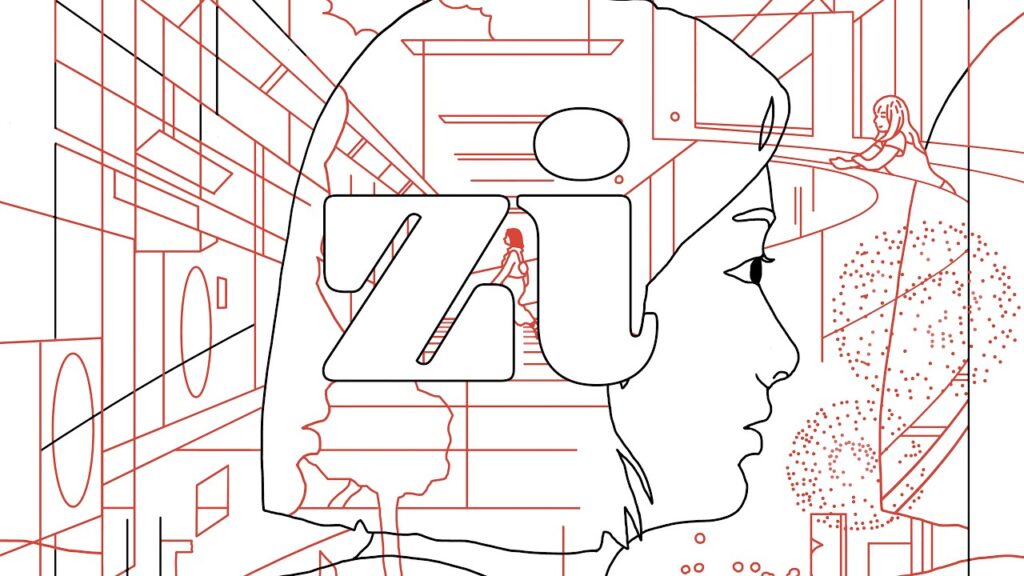

One Night in Hong Kong
The Zi movie begins with a simple, almost fragile idea: a young woman walks through Hong Kong for one long day and night, and nothing about that night goes quite the way she expected. Zi, played by Michelle Mao, is a violinist whose memory is slipping. She keeps seeing visions of her future self, as if the person she might become is already walking a few steps ahead of her, waiting to be caught up with.
Writer and director Kogonada holds that premise gently. He does not rush to explain the visions, and he does not turn them into a puzzle with a neat solution. Instead, the Zi movie lets Hong Kong do a lot of the talking: neon light on wet streets, crowded corners that suddenly feel empty, and quiet moments between strangers that carry more weight than any big speech. It is a film about memory, time and human connection, and it trusts the audience to feel those things rather than having them spelled out.
Zi and Elle: Two Strangers, One Reflection
The heart of the Zi movie is a meeting. One night, Zi meets Elle, played by Haley Lu Richardson, a stranger she recognises from her visions. That recognition changes the whole evening. What starts as a chance encounter becomes a walk, a conversation and a slow exchange of confidences between two people who seem, in some uncanny way, to know each other already.
Mao carries the film as Zi, a young musician trying to hold on to herself while her memory falters. Richardson, reuniting with Kogonada after Columbus, plays Elle with the same watchful warmth that made her earlier collaboration with the director so memorable. Jin Ha completes the central trio as Min. The three performances are deliberately small in scale: a look held a second too long, a laugh that arrives unexpectedly, a silence that says more than dialogue could. In a month full of loud November releases, that quietness is exactly what makes the Zi movie stand out.
Image Credit: Grasshopper Film — Official Trailer via YouTube
Five Things the Trailer Tells Us
The official trailer for the Zi movie, released by Grasshopper Film, gives away very little plot, and that restraint is the point. First, it establishes Hong Kong itself as a character, with the camera moving through streets that feel both beautiful and slightly unreal. Second, it shows Zi alone with her violin, suggesting music is not just her job but the way she understands her own life. Third, it introduces Elle not as a mystery to be solved, but as a person, which keeps the film human rather than gimmicky.
Fourth, the trailer leans into mood over explanation. There are glimpses of the two women together, of city lights, and of moments that may be memory, vision or simply the present, and the trailer refuses to label which is which. Fifth, it confirms the film’s scale: this is an intimate drama, shot with a tiny crew on location, not a spectacle. Viewers who love slow, thoughtful cinema will recognise the tone immediately; viewers looking for a fast thriller should know this is something else entirely, and all the better for it.
Kogonada’s Quiet Reset
The Zi movie also matters because of where it sits in its director’s career. Kogonada made his name with Columbus, a hushed, architectural drama, and followed it with After Yang, a tender science-fiction story about grief and memory. His most recent big-budget film, A Big Bold Beautiful Journey, did not connect with audiences in the same way, and the Zi movie feels like a deliberate return to smaller, more personal filmmaking.
Reports from the film’s production describe it as quietly shot guerrilla-style in Hong Kong over a couple of weeks, with cinematographer Benjamin Loeb behind the camera. That small-scale approach suits the story: a film about a woman trying to remember herself does not need a huge canvas. It needs streets to wander, faces to study, and time to breathe. The film gives itself exactly that, and the result, according to early festival coverage, is a sensitive cinematic poem rather than a conventional drama.
The Craft Behind the Dream
One detail that has drawn a lot of attention is the music. The film features music by the late Ryuichi Sakamoto, whose work always carried a particular kind of wistfulness, a sense of beauty mixed with loss. That fits a story built around absence and longing perfectly. The film runs 99 minutes and is in English, Cantonese and Mandarin, with English subtitles, which reflects the Hong Kong setting honestly instead of smoothing it over.
Kogonada wrote, directed and edited the film, and produced it alongside Chung An, Christopher Radcliff, Benjamin Loeb, Haley Lu Richardson, Michelle Mao and Jin Ha. That hands-on, collaborative credit list tells its own story: this is a film made by a small group of people who believed in a fragile idea and protected it all the way to the screen. It premiered at the Sundance Film Festival earlier in 2026, where the festival’s synopsis described it as a story of existential anxiety, romantic misgiving and personal memory, held within a stylish journey through Hong Kong.
When and Where to Watch the Zi Movie
Grasshopper Film will release the Zi movie in theatres on 6 November 2026, beginning with an exclusive one-week engagement at the Metrograph in New York. The release then moves through Philadelphia, San Diego, Seattle, Boston, Austin and Rochester over the following weeks. The New York opening is accompanied by a special Metrograph retrospective, Kogonada: A Way of Looking, running from 6 to 8 November, which places the new film alongside the director’s earlier work and influences.
That limited opening means most viewers will not be able to walk into their local cinema on 6 November and find the film playing. It is a select-theatres release, and wider availability will depend on how the initial run performs. No streaming or OTT date has been announced yet, so anyone writing about the film should be clear on that point: for now, theatres are the only confirmed way to watch it, and an OTT announcement, when it comes, will be a separate piece of news.
Should You Watch It?
The Zi movie is not trying to be everything to everyone, and that is its strength. If you loved Columbus or After Yang, or if you enjoy films that linger on a face, a street or a piece of music instead of rushing to the next plot twist, this is one of the most interesting small releases of November 2026. If you prefer big, plot-driven cinema, the film’s dreamlike pace may test your patience, but even then, the performances of Michelle Mao and Haley Lu Richardson give you plenty to hold on to.
Watch the official trailer below, and keep an eye out for the film as it travels to more cities after its New York opening. In a month crowded with blockbusters, the film is a reminder that sometimes the most memorable night at the cinema is the quietest one. For another November release, see The Rings of Power Season 3.
Frequently Asked Questions
When does the Zi movie release?
The Zi movie opens in theatres on 6 November 2026, beginning with a one-week engagement at the Metrograph in New York, followed by select dates in other US cities.
Who stars in the Zi movie?
Michelle Mao stars as Zi, Haley Lu Richardson plays Elle, and Jin Ha plays Min. The film is written, directed and edited by Kogonada.
Is the Zi movie available on OTT?
No streaming or OTT date has been announced yet. For now, the confirmed release is the limited theatrical run starting 6 November 2026.
What is the Zi movie about?
It follows a young Hong Kong violinist whose memory is slipping and who keeps seeing visions of her future self, until a meeting with a stranger named Elle changes the course of her night, and possibly her life.


Pingback: Ranabaali OTT Release: 5 Lovely Reasons to Watch on Netflix